
News & Resources
Read our latest insights and explore our resources, including company updates, articles, white papers, case studies, webinars and more.
-
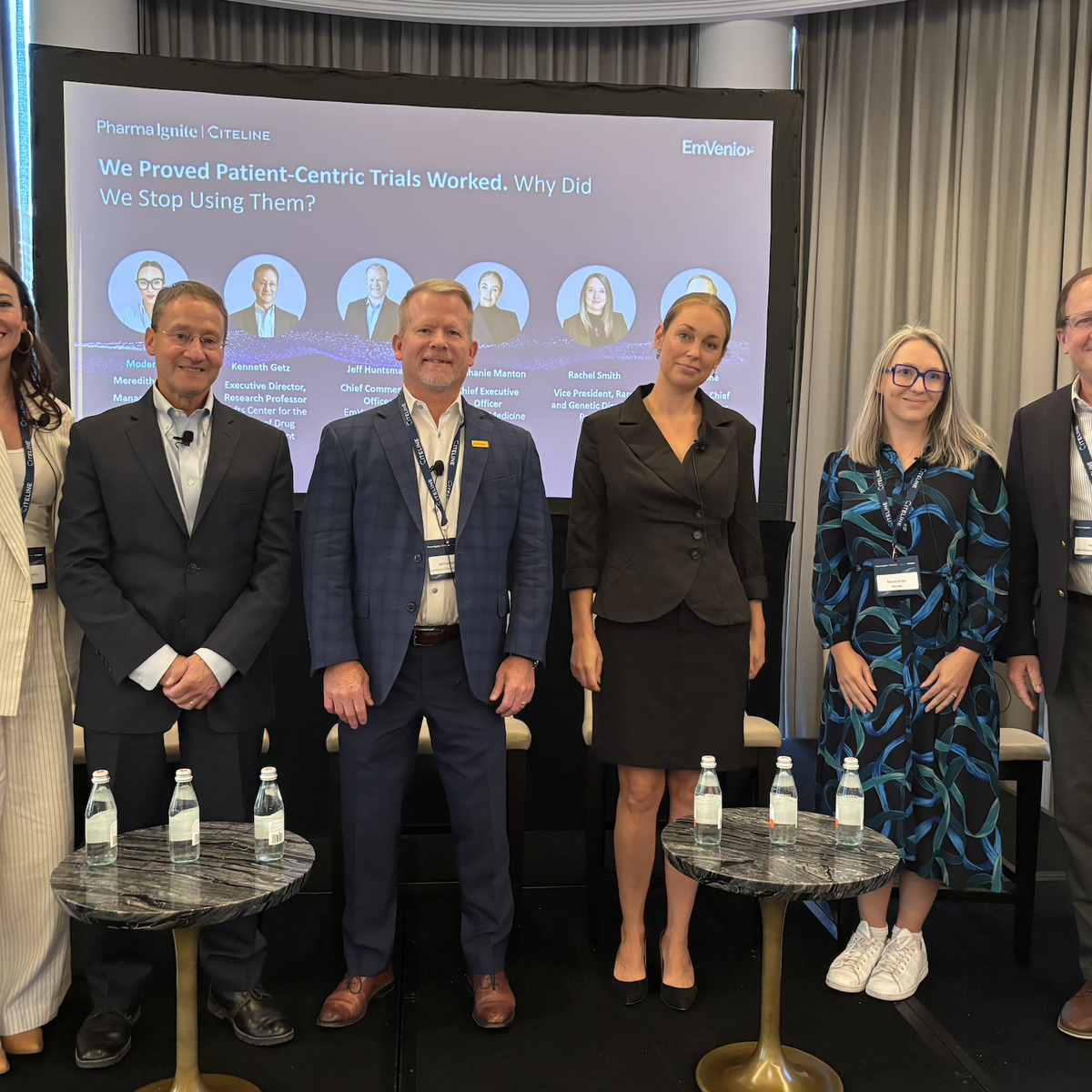
What You Missed in Boston: Is Clinical Research Really Patient-Centered?
During COVID-19, clinical research changed almost overnight. Trials moved closer to patients, long-standing assumptions about where and how studies had to operate were challenged, and approaches once considered too difficult suddenly became possible. So why did so much of the industry go back? That question opened a candid and wide-ranging […]
-
When Vendor Disruption Threatens Trial Timelines: What Sponsors Should Do Next
By Jeff Huntsman, Chief Commercial Officer, EmVenio Research Clinical trials are built around timelines. Enrollment milestones. Site activations. Patient visits. Data collection. Every partner supporting a study plays a role in keeping those timelines on track. But what happens when a key vendor can no longer support your trial? Whether […]
-
What Actually Drives Patient Engagement in Clinical Trials?
When it comes to patient engagement in clinical trials, we often turn to recruitment and attrition metrics to measure success or failure. We track enrollment rates, retention rates, missed visits, protocol deviations, and patient withdrawals. We analyze recruitment challenges and investigate the reasons patients leave studies early.1 While these metrics […]
-
Sustaining Participation in a 20-Year Alzheimer’s Family Study
The biggest retention challenges often don’t appear until years after enrollment. As patient needs evolve, participation options should evolve with them. In an Alzheimer’s Disease Family-Based Study designed to follow patients for up to 20 years, home visits allowed patients to continue participating as travel became more difficult and care […]
-
Retaining Patients for 13+ Years in DIAD Research
Retention doesn’t happen by accident. It requires sustainable participation options for both patients and caregivers, especially in long-term studies. In a Dominantly Inherited Alzheimer’s Disease (DIAD) study, home visits made it possible for one patient to remain in the trial for more than 13 years through consistent access to care […]
-
Why Better Communication— Not Just Better Design—Will Define The Next Era Of Vaccine Research
Efforts to improve clinical trial access and representation have expanded significantly in recent years, yet participation gaps persist. The discussion highlights how trust, community influence, and patient experience are increasingly shaping trial participation. It also underscores the need to move beyond treating communication as a downstream activity and instead embed […]
-
Why Patient Dropout isn’t a Patient Problem
Patient dropout in clinical trials is not typically the result of low motivation or an unwillingness to make the sacrifices that study participation may require. Yet these are often the explanations researchers reach for when attrition becomes a persistent challenge.1 Instead of shifting responsibility onto patients, it is time that the industry reflects inwards and challenges itself to better understand what drives both enrollment […]
-
Traditional, Hybrid, or Decentralized: What Actually Works?
Every indication and every patient is unique. So, trying to develop a therapy that will safely and efficiently treat patients while considering the parameters of the therapeutic indications as well as the patient’s needs is a daunting task. Yet somehow, year after year, researchers manage to develop therapies and treatments […]
-
Driving Engagement, Improving Outcomes: The Impact of Virtual Registered Dietitian Support in Metabolic Trials
In obesity and metabolic clinical trials, some of the biggest threats to success aren’t found in the protocol. They happen between study visits. Lifestyle changes, side effect management, and long-term behavioral adjustments can all influence patient retention, adherence, and ultimately study outcomes. Learn how EmVenio’s virtual Registered Dietitian model helped […]
-
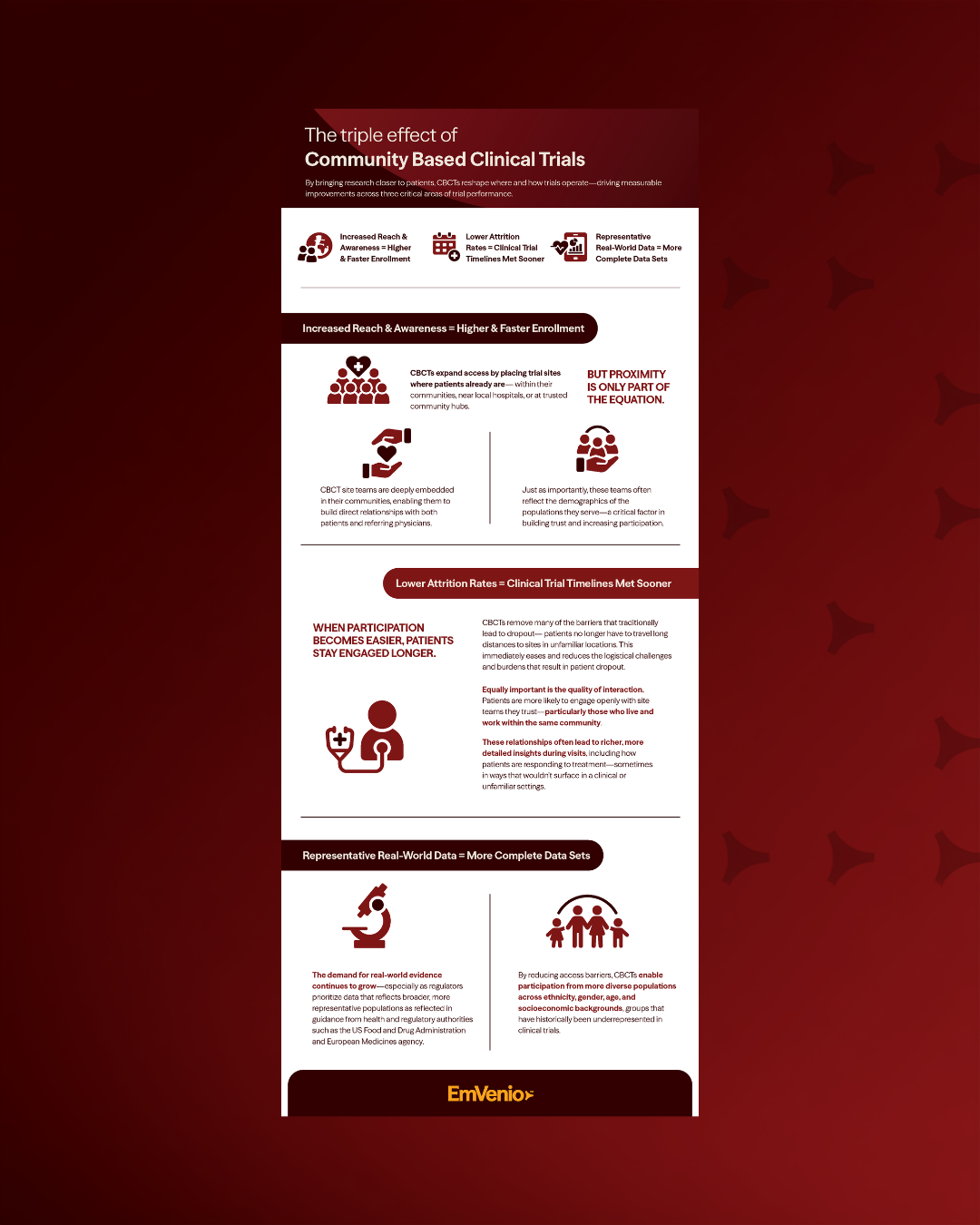
Infographic: The Triple Effect of CBCTs
Community-based clinical trials offer more than just improved access. They create a ripple effect across study performance. By bringing research closer to patients, sponsors can unlock what we call the “Triple Effect”: higher enrollment, lower attrition, and more representative data. Get the highlights by downloading the infographic below: Read the […]
-
Turning Patient Access into Participation: What’s Still Missing in Clinical Trials
Decentralized clinical trials have expanded access, but access alone doesn’t fill studies. The missing link isn’t reach. It’s participation. And reach is where it starts. Too often, DCTs are treated as a silver bullet for enrollment and retention. But while they remove logistical barriers, they don’t automatically drive engagement. Access may open the door, but it doesn’t ensure patients walk through it […]
-
Representative Data = More Complete Outcomes
Data gaps don’t start at analysis- they start with who has the opportunity to participate. When certain populations are not included in clinical trials, they don’t just impact enrollment- they are missing from the data entirely. Traditional site models often limit participation, resulting in datasets that don’t fully reflect the populations therapies are intended to serve. Community-based clinical trials expand participation from the […]